
The Evolution of Minecraft Speedrunning
Minecraft speedrunning did not become a scene overnight. It grew as players realised that this blocky sandbox could be treated as a race. The goal was simple: reach the End, defeat the Ender Dragon and stop the clock. What changed over time was everything around that goal. Runners found different ways to race, new versions changed the route, moderators built trust around records, and live events turned speedruns into something an audience could watch together.
One moment from Summoning Salt's "Minecraft Speedrunning: A Brief History" captures that evolution especially well. At 10:03 in the video, D Max enters a ruined Nether portal, takes a huge risk and finds a stronghold close enough to set a 17:26 world record. That clip is included in this article because it shows how far the scene had moved from simple route running into calculated gambles.
The scene by era
For the early days, runners used speedrun.com to find games, categories and community leaderboards in one place. The site became a shared reference point before the Minecraft scene grew into the larger broadcast and ranked scene it is now.
Speedrun.com becomes the hub
Community leaderboards

- Runners used speedrun.com to find games, categories and community leaderboards.
- The site gave Minecraft speedrunning a shared place to compare attempts.
A new Nether changes the route
The 1.16 era
- Bastion Remnants gave runners a new structure to plan around.
- Piglin trading made ender pearl collection part of the route.
A ruined portal pays off
Blind travel record
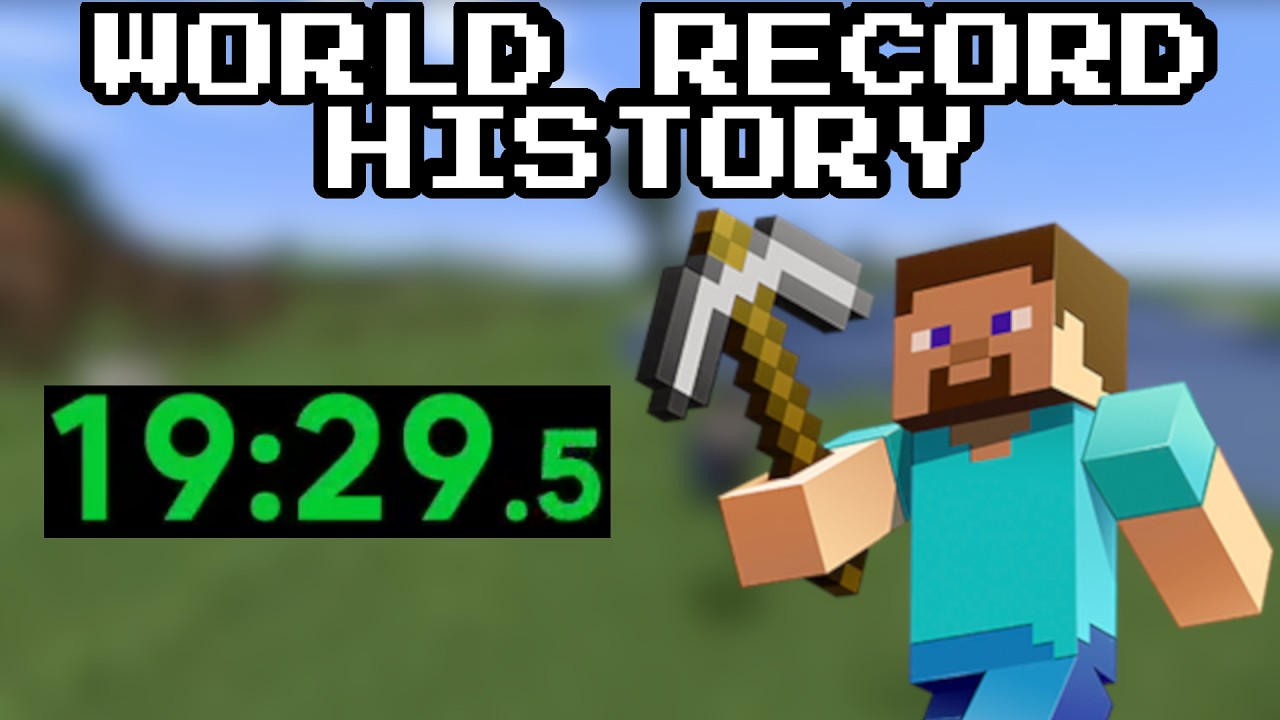
- A random Nether exit could have put the stronghold far away.
- This time it landed close enough to save several minutes.
MCSR Ranked is created
MCSR Ranked begins

- The official account credits RedLimeRL and OliverMCSR as the creators.
- The project grew into ranked matches, replay tools and its own Playoffs.
Speedrunning becomes a show
TwitchCon stage
- The Mid-Offs brought runners and coaches into a live event format.
- Twitch clips let viewers replay the best stage moments.
First, there were two ways to race
In the beginning, the big split was between set seed and random seed speedrunning.
A set seed run uses a world chosen before the attempt starts. The terrain, villages, structures and stronghold locations are already known. That means the runner can practise a route and focus on clean movement, accurate crafting and fast decisions. It is similar to a traditional speedrun where the course stays the same and the player tries to make every second better.
Random seed speedrunning is different. The runner loads a world they have not seen before and has to adapt immediately. No two attempts are the same. A good route still exists, but the world decides how much of that route is possible. That uncertainty became the heart of the modern Minecraft speedrun scene.
The two categories never really replaced each other. They simply gave runners two different skills to master: precision on a known world, and adaptation on an unknown one.
Random seed finds its own rhythm
As random seed speedrunning grew, runners began shaping a route around the game's main stages. They needed resources from the Overworld, a way into the Nether, structures to search, a stronghold to reach and finally the End. The order could change, but each part of the run became a chance to save time.
The interesting part was that the runner could not simply memorise the world. They had to read it. A village could make the early game fast. A fortress could provide the blaze rods needed later. A badly placed structure could turn a promising run into a long walk. Over time, runners learned which risks were worth taking and which ones were likely to waste minutes.
This is where Minecraft speedrunning started to feel less like following a script and more like playing a very fast game of decisions.
Minecraft 1.16 changes the map
The 1.16 update gave the Nether a much bigger role. Bastion Remnants and piglin trading changed what runners could look for after entering the Nether. Instead of relying only on fortresses and the structures closest to the portal, runners could plan around Bastions, gold and ender pearl trades.
That changed the route. A Bastion was no longer just somewhere dangerous to pass through. It became a place with useful resources. The video explains how runners worked out ways to trade with piglins and make pearl collection more consistent. Those ideas helped turn speedrunning from a run of lucky moments into a run built around repeatable strategy.
The update did not make luck disappear. It gave runners more tools to work with when luck appeared.
The 2020 boom
According to the video, the 1.16 random seed leaderboard had just 20 runs on the day Nice Twace submitted a record on July 3, 2020. A few months later, it had nearly 400 submitted speedruns. Minecraft had become one of the most talked about speedruns in the world, helped by large content creators bringing the category to new viewers.
That growth changed the feeling around every record. A world record was no longer just a number on a leaderboard. It became a video, a discussion and sometimes a debate. Viewers learned the route too. They knew when a runner had taken a risk, when a portal had gone well and when a split had gone wrong.
Speedrunning was becoming a spectator scene.
The gamble that became a record
In the normal route, runners leave the Nether through the same portal they used to enter it. That brings them back near coordinates 0, 0. Strongholds generate in a ring around that area, so the runner is usually roughly 1,200 blocks away from one. It is not a short trip, but it is predictable.
D Max's run used something riskier. He found a ruined portal in the Nether, completed it with obsidian and stepped through without knowing where it would lead. The video explains that the Overworld exit could leave the stronghold more than 2,000 blocks away, or it could leave it very close.
It was close. The stronghold was only a couple hundred blocks away, he saved several minutes and the run became a 17:26 world record. The video describes it as the first record to use blind travel to find the stronghold.
This is the moment where the history of speedrunning becomes easy to see. Early routes were about knowing what to do. Runs like this one were about deciding what was worth risking.
When every second needed checking
As times dropped, the community had to protect the meaning of a record. Fast runs needed to follow the rules, and suspicious details needed answers.
The video covers a 14:56 run from Corbanos that raised questions after it was submitted. The seed and the run's details led people to look closely at what had happened. After an investigation, moderators verified the run.
That part of the story matters as much as the records themselves. Speedrunning depends on trust. Runners push the game as far as they can, but moderators and clear rules decide which attempts count. Without that work, the leaderboard would stop meaning anything.
The mod era and MCSR Ranked
Over time, practising Minecraft speedrunning became its own part of the scene. MCSR Ranked is a speedrunning mod built around learning and playing the game in a ranked setting. Its official account says it was created by RedLimeRL and OliverMCSR.
The MCSR Ranked Wiki describes systems such as filtered seeds, RNG standardization, Elo and ranks, matchmaking, replay tools and rules. The project also runs its own Playoffs tournament, described as an official speedrunning tournament with a 16 player bracket.
This created a new way to experience the game. Instead of only chasing one personal best on a public leaderboard, players could enter a ranked structure built around repeated matches against opponents. The official download page also warns that MCSR Ranked is not legal for speedrun.com leaderboard runs, so it is its own competitive space rather than a replacement for the main leaderboard.
Speedrunning steps onto the stage
The latest stage in the story is the live event. Tubbo's Mid-Offs took the competitive format and made it something to watch in person and on stream. The live version was presented at TwitchCon, including "The Midoffs LIVE presented by Tubbo" at TwitchCon Rotterdam and "The Mid-Offs: LIVE AGAIN" at TwitchCon San Diego.
Official Minecraft clips from Twitch show why this format worked. The runners were not only racing the clock. They were racing in front of commentators, a crowd and an online audience, with every mistake and recovery happening live.
That is a long way from a runner loading a world alone and seeing how fast they can reach the End. The game is the same, but the scene around it has grown into something much larger.
How it all changed
Minecraft speedrunning evolved in layers. Set seed runs taught precision. Random seed runs taught adaptation. New updates created new routes. The 1.16 boom brought in more runners and more viewers. Blind travel showed how a single decision could rewrite a record. Moderators made records trustworthy. MCSR Ranked gave players a ranked way to practise and compete. Mid-Offs brought the whole thing onto a live stage.
The 10:03 clip remains the spark for this article, but it is also a useful symbol for the whole history. A runner sees a possibility, takes the risk and finds out what the world has decided. That is what has made Minecraft speedrunning interesting from the beginning, and it is why people still watch.
Sources
- Speedrun.com, used as the early-days leaderboard and category reference
- How to speedrun Minecraft, official Minecraft article and source of the header image
- Minecraft Speedrunning: A Brief History, video by Summoning Salt, including the 10:03 timestamp highlighted above
- MCSR Ranked homepage
- MCSR Ranked Wiki: Gameplay
- MCSR Ranked Wiki: Playoffs
- MCSR Ranked official account
- TwitchCon Rotterdam 2026 schedule
- TwitchCon San Diego 2026 schedule
- Tubbo on Twitch
- The Mid-Offs: LIVE AGAIN clip on the official Minecraft Twitch channel
- The Minecraft Mid-offs massacre clip on the official Minecraft Twitch channel
- Midoffs Community clip on the official Minecraft Twitch channel